Now you can Subscribe using RSS

Submit your Email

30 March 2010

Eco Easter holiday & sticky chocolate news

Going on an Eco Easter adventure?  Don't forget to...

Switch off the hot water system before going away - you could be wasting energy and money keeping water hot when you're not there.

Service your car before a long trip and check your tyre pressure. A tuned up car improves fuel efficiency by up to 30% and will save you petrol money. 

Take your reusable shopping bags on the grocery supplies trip.

Recycle bottles, cans, cardboard and plastic packaging.  Please call your local Council to check which types of plastic packaging they will accept - many will accept the firm plastic that easter eggs are packaged in.

Encourage kids at home to switch off their game consoles, DVD player, TV and stereo at the wall when not in use.

Purchase Easter gifts with the least amount of packaging and choose certified Free Trade and organic chocolate and easter eggs.

References http://www.climatesmart.qld.gov.au/

What to take?

Eco friendly picnic, catering and entertaining supplies, reusable water bottlestainless steel cup set, BPA-free lunch boxes for storing food.

Petrochemical free natural sunscreen, environment-safe shampoo and soap (especially camping in National Parks).

Natural mosquito repellant and New Mountain sandalwood mosquito diffuser, flies off food nets.

Sticky chocolate issues

Will Nestle ever reclaim its Facebook page from palm oil protestors  Is this the most successful social-media influence campaign ever...?

Treehugger reports on the wasteful excess of Easter Egg packaging and improvements to eliminate plastic boxes.  Easter Candy Insanity...

Australian Fair Trade Easter 2010 Campaign website.  Learn more about the issues and the choices you can make.

23 March 2010

Compost and animal friends love watermelon skin

We had some great suggestions from Biome Facebook fans on what to do with our watermelon rind waste.

Horses and dogs love to eat watermelon skin, along with chickens - who not only love to eat it, but they turn it into eggs as well!


And, composting of course.  Environmentalist David Suzuki says you will reduce greenhouse gas emissions by composting your household waste rather than sending it to landfill.  He says that in Canada “landfills produce the greenhouse equivalent of five million cars”. 


When food, garden waste, nappies, paper and cardboard are disposed of in landfill they decompose anaerobically (without air) and produce methane—which is 21 times more potent as a greenhouse gas than carbon-dioxide. However, the composting process at home does not contribute to methane generation because it takes place close to the surface and oxygen.


The Bokashi composting system is popular for its convenience and because it produces a rich soil fertiliser that does wonders for your plants.  Bokashi microbes "ferment" the scraps without smells, so you can keep the bucket under your sink or in your home.

19 March 2010

Waste diary & BBQ watermelon rind challenge

In the spirit of our waste diary challenge posted last week I undertook a "fridge cleansing", which purged a lot more waste than we normally would generate.  It was time to confront all those disposal dilemnas that I hide away at the back of the fridge.

The fridge clear-out put my compulsion for hoarding relishes and condiments under a harsh spotlight.  So many that I could not recall how long they had been there and that I could no longer face eating.  Getting rid of the contents and rinsing the jars can use a lot of precious water, but we are told by the Council that containers and jars must be clean-ish before putting them into recycling.

Our waste from meal preparation was minimal, just avocado skins, seeds, carrot peelings and the like.  I snuck the end slices of the tomatoes onto sandwiches - breaking my silly habit of throwing out the ends.  Instead of wasting the crusts on the end of bread, I put them in the freezer to use for breadcrumbs later. That tactic does however have a limited life span, as there are few uses for breadcrumbs in my cooking repertoire!


This photo from The Guardian by Tristram Stuart shows three identical Romaine lettuces purchased at the same time and stored for ten days, from left to right 1) at room temperature 2) in the fridge and 3) in a glass of water like cut flowers.  Inspired, I kept herbs in water (refreshed daily) and they stayed fresh much longer. 

Our biggest volume of waste was watermelon rind!  Apparently the white flesh and green skin is used as a vegetable in many Asian countries and contains great vitamins, minerals, fibre and antioxidants.

I love that you can so easily find recipes on the internet for weird and wonderful ingredients, like:
Watermelon Skin Halwa
Barbequed Watermelon Rind with Sauces
Watermelon Pie from southern USA

Someone has even dedicated a whole site to fill your belly, not landfill with watermelon

The challenge now is to give them a go.  BBQ watermelon rind first...

12 March 2010

Livia Firth promotes sustainable fashion at Oscars

Photo from Vogue.com

Livia Giuggioli, Italian film producer and wife of Colin Firth, writes a blog for Vouge.com "The Green Carpet Challenge".  If you have an interest in sustainable fashion, Livia shares great information about how she dressed for the film awards season and some of the ethical and environmental issues related to fashion.  To the Oscars she wore ethical Australian pink Argyle Diamonds by Calleija Jewellers.

One issue she highlights is the deceptive labelling and marketing of bamboo fabric.  She points to this article by the US Federal Trade Commission  Have you been bamboozled by bamboo fabric? .  This is taken from the article:
Looking to be a more environmentally conscious shopper? You’ve probably heard about bamboo. Bamboo stands out for its ability to grow quickly with little or no need for pesticides, and it is used in a variety of products, from flooring to furniture. But when it comes to soft bamboo textiles, like shirts or sheets, there’s a catch: they’re actually rayon.

The Federal Trade Commission, the nation’s consumer protection agency, wants you to know that the soft “bamboo” fabrics on the market today are rayon. They are made using toxic chemicals in a process that releases pollutants into the air. Extracting bamboo fibers is expensive and time-consuming, and textiles made just from bamboo fiber don’t feel silky smooth.
There’s also no evidence that rayon made from bamboo retains the antimicrobial properties of the bamboo plant, as some sellers and manufacturers claim. Even when bamboo is the “plant source” used to create rayon, no traits of the original plant are left in the finished product.
Companies that claim a product is “bamboo” should have reliable evidence, like scientific tests and analyses, to show that it’s made of actual bamboo fiber.

07 March 2010

Lunch boxes wrap up on what's eco and safe

Would you agree that the most eco-friendly solution usually turns out to be the best choice for your health and your budget also?  We find that making the safest choice for the planet is the safer path for people too, particularly when it comes to natural skin care, green cleaning and petrochemical plastic products.

With a simple decision on lunch boxes and how to pack a lunch, you can: help the planet by opting for long lasting and resource-efficient materials, reduce waste going to landfill, protect your health by avoiding toxic plastics, and save a little cash by reusing and buying in bulk.

Many Australian schools are trying to reduce rubbish by encouraging children to take home food scraps, use composting at school and use less plastic wraps.  Our family is fortunate to live very close to our school, but not so fortunate to be woken at dawn each morning by the clean up crew--the crows!  So there may even be an extra benefit for us from a waste-free lunch policy...a sleep in.

One of the nasties to avoid when choosing a lunch box, is Polyvinyl Chloride (PVC) - recognised by this symbol.  Often on a soft shiny plastic lunch box (often the grey plastic inside) there is no label to tell you what it is, but it is more than likely PVC that can contain lead and phthalates.
According to the Center for Health, Environment & Justice (CHEJ): "PVC is unique among plastics because it contains dangerous chemical additives used to soften it.  These harmful chemicals include phthalates, lead, cadmium and organotins, which can be toxic to a child's health.  Over 90% of all phthalates are used in PVC products such as school supplies.  Federal (US) law has banned the use of phthalates in children's toys, but not children's school supplies.  Lunch boxes, binders, vinyl backpacks and art supplies are frequently made out of PVC."

"Children are particularly vulnerable to the harmful effects of toxic chemicals used in PVC.  Recent studies have linked PVC flooring to increased rates of autism and asthma.  Chemicals that evaporate or leech out of PVC products may contribute to developmental disorders and damage to the liver, central nervous, respiratory and reproductive systems." 

Further, many environmental groups are calling for the banning of PVC because it releases dioxins during manufacturing and when it is burned, recycled or or disposed of in landfill.  Both Wikipedia and CHEJ detail the dangers, including how highly toxic dioxins have been found to cause cancer in workers manufacturing PVC. 

How to identify products with PVC
  • Labelled with the word “vinyl” (e.g. vinyl ring binders)
  • #3 recycling symbol or with the letters “V” or “PVC” underneath the recycling symbol
  • Shiny flexible plastic inside and outside lunch boxes, back packs, clothing (such as raincoats) and waterproof mattress protectors. 
  • Don't buy the product if it is not labelled with the type of plastic or with specific statements that it is lead free and PVC free.
  • Contact the manufacturer or retailer to ask what plastic the product is made of.
Choose lunch boxes and school products made from metal such as stainless steel, fabric, sustainable wood, recycled paper and safe plastics that are PVC free, BPA free and lead free.  Polypropylene is also a safe choice.
    Biome has just introduced the exciting Kids Konserve waste-free lunch range (pictured above): Food Kozy sandwich wrap, insulated lunch bag made from recycled PET bottles, stainless steel food container, ice pack and more. 
    Biome also offers:
    Goodbyn all-in-one lunchboxes with cool stickers
    LunchBots stainless steel lunch boxes
    4myearth sandwich wraps
    Thermos
    Klean Kanteen insulated wide mouth bottles
    Bento boxes

    04 March 2010

    Freegans waste not - will you keep a waste diary?

    Thank you to the simple living blog Little Eco Footprints for the inspiration for this post.  I love reading about your actions, especially your latest post Saved from the bin where you mentioned the Australian food rescue organisations that save food before it makes it into the bin - Oz Harvest, Foodbank, FareShare, SecondBite. Amazing that blog author, Tricia, then saw an Oz Harvest van pulling up at the Aldi Supermarket across the road from her - that was karma!

    It's a topic that can make you feel so powerless on the world scale, but what really matters is each of our individual households.   Apparently, we throw out about one quarter of the food we buy.  That can't be hard to change.

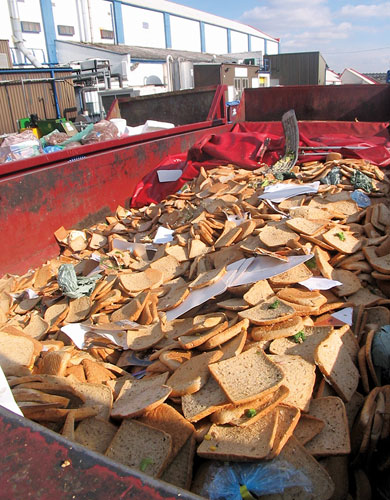
    The Guardian in the UK has an insightful feature on 'Freegans' and food waste. This article profiles Freegan campaigner Tristram Stuart and this is an eye-opening photo gallery of foods that are thrown away by stores or left to rot. The below photo shows the result of Marks & Spencer's requirement for its sandwich supplier to discard four slices from each loaf: the crusts and the first slice at either end.  This means 13,000 slices of fresh bread are discarded every day from a single factory...


    How much do you throw away in one week?
     
    The Guardian asked three people to record what they threw away in one week. I am going to try to keep a diary this week and report back.  That is scary, but it is incentive to be careful about what we buy.   Would anyone else like to keep a record and share it with us in a week or so?

    19 February 2010

    Top 10 vegan & vegetarian recipe websites we love

    Eating less meat and more plants is not only for compassionate and environmental reasons, it is also healthy and great for those trying to trim down a little.  (I have a confession that I am loving The Biggest Loser's Friday Masterclass and they encourage proteins from plant sources!).   I'm loving cooking with my Gastrolux non stick cookware too - no toxic emissions and no oil required!

    Here's my top 10 online resources for scrumptious vegetarian and vegan dishes, with favourite recipes picked out for you.

    http://bittersweetblog.wordpress.com/e-books/
    Four e-books by vegan author Hannah Kaminsky
    to download for just US$5 each with amazing recipes for ice cream and sweet treats made with no eggs or dairy.    RECIPE PICK *  Buttered popcorn ice cream!  

    http://veganfeastkitchen.blogspot.com/
    HUGE list of recipes from Bryanna Grogan, author of 8 vegan bookbooks and The Vegan Feast quarterly newsletter.  
    RECIPE PICK * Marinated tofu that's kinda like fetta
     

    http://veganyumyum.com/ Lovely photos to accompany yumyum recipes and helpful "how to" section with how to Supreme an orange, how to slice a mango, etc.
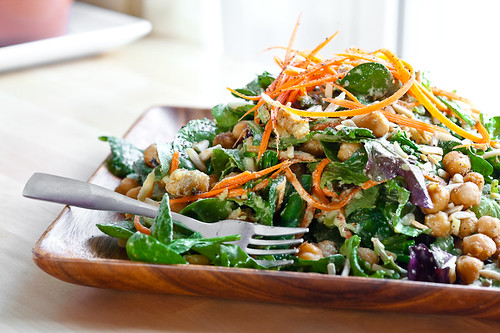
    RECIPE PICK * Avocado Wasabi Salad (pictured)  

    Martha Goes Green vegetarian cookbook  Independently published in Melbourne, Australia, printed on recycled paper with vegetable inks, with over 50 vegetarian and health conscious recipes.   Available to buy from Biome with all our vegetarian recipe books.  RECIPE PICK * Chocolate Tofu Mousse


    http://www.flickr.com/photos/47633560@N00/
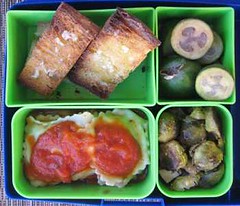
    Japan and the US have been crazy for Bento boxes long before the "waste-free" lunch box trend hit Australia.  SV Mama is a member of the Flikr Vegan Bento group that has lots of photos of Bento lunches.  Not actual recipes, but lots of ideas to fill up little boxes, like pictured here: Garlic Bread, Ravioli with Marinara Sauce, Pineapple Guavas and Sauteed Brussel Sprouts. Not sure I could get brussel sprouts past the kids!  

     
    http://www.kurma.net Cooking with Australian Vegetarian Guru, Kurma Dasa.  Vegetarian and vegan recipes, invite Kurma to cook for you and follow his culinary adventures on his blog.  RECIPE PICK * Barbequed Haloumi with Chargrilled Asparagus and Salsa Verde

    http://bokchoybohemia.com/ Everything Vegetarian and Kosher, gloriously humane comfort foods.  

    RECIPE PICK * Vegan Thom Kha Tofu soup.   For those of us who usually miss out on this amazing Thai soup.

    http://blog.fatfreevegan.com/  Won the US Veg News Veggie Awards – Readers Favourite Bog in 2007 and 2009.  Lovely photos and recipes for wholefoods without a lot of processed fat and sugar.  RECIPE PICK * Mini Crustless Tofu Quiches


    http://www.backyardbowls.com/acai_bowls.html
    Not the exact recipes, but ideas you can try - you just need to track down some Acai pulp!  If you’re everin Santa Barbara, look up Backyard Bowls.  To make Acai bowls they blend
    the frozen pulp of the Acai berry with fruits and coconut milk into a thick smoothie. Put that blend in a bowl, top it with granola, fresh fruits, Goji berries and honey.

     
    http://seitanismymotor.com/
    German influenced, so some great gluten-free breads and vegan sausages.  The longest link list of other Vegan food blogs I’ve ever seen.  Learn to make Seitan, which is made from wheat gluten and when cooked looks a lot like meat.
    RECIPE PICK * Olive and Seitan Sausages


    When you go shopping for supplies, don't forget your reusable shopping bag

    16 February 2010

    Meat Free Mondays gives different angle on vegetarian study

    Thank you so much to one of our readers, Meg, for this referral to the Meat Free Monday website and the actual WWF report How Low Can We Go?

    It is fascinating how there were several news angles that could have been taken from the WWF report, but the media picked up on the bad news/more sensationalist headline that "a vegetarian diet can harm the environment".  Actually, the report was looking at the greenhouse gas emissions involved in the UK food system, and the scope for reducing them by 70 per cent by 2050.  

    The Meat Free Monday article gives a much more balanced assessment of the WWF report.  The report said that livestock rearing alone accounts for 57 per cent of harmful emissions from UK agriculture.  It indicates that a vegetarian diet (with dairy and eggs), a 66 per cent reduction in livestock production consumption, and technologies to reduce nitrous oxide emissions from soils and methane from ruminants, had the potential to reduce direct supply chain emissions by 15-20 per cent.

    According to the Meat Free Monday article: the report pointed out that any change in meat consumption patterns would have to be managed carefully. Less animals would mean less animal feed, for example, freeing up arable land, but how we compensate for a diet lower in meat, eggs and dairy could also have an adverse effect in terms of emissions. A switch from beef and milk to tofu and quorn could mean we need more arable land, not less. Emissions could be reduced nine per cent with a switch from red to white meat, the report also said, but would see an increase in the import of soy meal for poultry feed.

    The report warned that "careful assessment" would be needed to avoid "unintended consequences", however. If the livestock industry contracted and collapsed entirely then the UK would be dependent on low-cost exports from other countries - it might make us healthier, but the environmental problems associated with meat production would simply be shifted elsewhere.

    15 February 2010

    Vegetarian no longer eco. Who moved my cheese...?

    Photo of Chocolate Tofu Mousse from Martha Goes Green Vegetarian Cookbook

    In the world of eco-friendly, one thing is for certain... change!  Just when you think you have the goal posts lined up for what is the most eco-friendly choice, someone moves them.  This is not a criticism, we love the intellectual and ethical deliberations, but I'm not good at change.  When it comes to change, I turn like an ocean-liner...slowly.

    It happened with palm oil and soy.  At first, it was virtuous to be replacing petrochemical oil with with a plant oil, for example producing a palm wax candle instead of a paraffin candle -- but then the environmental movement made us aware of the rainforest destruction being caused by palm and soy plantations.

    Bamboo is the perfect eco-friendly material, a fast growing and self-renewing plant requiring no pesticides or fertilisers that can be used for food, clothing, paper and building -- but now we've learned that we need to look for "panda-friendly" bamboo.  This is bamboo that does not deprive pandas of a food source, like Moso bamboo, which has no leaf growth on the first five metres of the stem.

    Recently, the WWF has released a report that shows a vegetarian diet is not necessarily better for the planet than meat.  The UK study found that many meat substitutes were produced from soy, chickpeas and lentils that were grown overseas and imported into Britain.  It found that switching from beef and lamb reared in Britain to meat substitutes would result in more foreign land being cultivated and raise the risk of forests being destroyed to create farmland. Meat substitutes also tended to be highly processed and involved energy-intensive production methods (quoted from the article at Times Online "Tofu can harm the environment..")

    When I read this story, the first thought that came to mind was "who moved my cheese" again? One of our Biome team introduced me to this great change management concept.  Your "cheese" may be your career, a relationship, your neighbourhood peace and quiet, your environmental values.  For those of us who struggle with change, it may be worth a look.  Who Moved My Cheese? is about helping you to enjoy less stress and more success by learning to deal with the inevitable change.

    The WWF study is not course-changing for us vegetarians, but it is a nudge to the bow.  It encourages everyone to think about where our food comes from and to eat more foods that are less packaged and less processed - the same principles for whatever diet you follow.

    More reading and vegetarian recipe books at Biome.

    05 February 2010

    Is every stainless steel bottle created equal? The story of two bowls.

    There are two stainless steel mixing bowls in my kitchen cupboard.  One feels more solid and has aged gracefully with use, the scratches seem to absorb into the worn smooth metal surface, which remains a dignified matt grayish colour.  The second, bought at a discount store (albeit under the brand name of a TV personality), has taken a distinct yellow tinge and is showing tarnish, its surface still artificially glossy.

    We often talk to customers about choosing high quality stainless steel, but here I can actually see the difference.  Clearly, the quality affects how it wears and potentially the toxins that it may impart to food or liquids stored inside a water bottle.


    There are important features to look for when choosing a reusable stainless steel bottle. Stainless steel is always made using chromium, because it is what makes steel "stainless".  Other elements used include nickel, nitrogen and molybdenum.   These elements can leach into liquids, so it is important that the bottle is made from high quality, 18/8 food-grade stainless steel – but, it is also important that you trust the manufacturer is telling the truth when they say what the bottle is made from.

    Some will aim to make the bottle from the thinnest and cheapest stainless steel they can in order to reduce manufacturing costs and hence increase profits.

    Other features are also important:
    Are the lids made from a BPA-free plastic and are the leak proof?
    Can you see sharp corners or joins where dirt and bacteria can build up?
    Can you buy a replacement lid without buying a whole new bottle?
    Does the manufacturer provide a guarantee?

    Consider who the manufacturer is.  Do they have a long history of quality, who are the real people behind the company and what is their story?  In 2004, Klean Kanteen was the first company to make a water bottle from stainless steel.  They have continued to lead the way constantly innovating with the range they offer.  Nathan is a top sports hydration company making high quality stainless steel bottles with a clever straw drinking mechanism.  Perhaps the grandparent of all stainless steel is Thermos, whose name has become synonymous with insulated bottles for hot water.  Many of us grew up taking “the thermos” on a picnic.

    From an environmental point of view, is a stainless steel bottle more eco friendly than a plastic bottle?

    A Life Cycle assessment study published in the New York Times in 2009, considered the environmental and health impact of stainless steel water bottle from the extraction and processing of its ingredients, to its manufacture, distribution, use and final disposal.  It found that if your stainless steel water bottle takes the place of 50 plastic bottles, the climate is better off.    So when you buy a bottle, make sure it is one that will last hundreds of uses.  ‘Buy quality less often’ we always suggest at Biome.

    From a human point of view, who made the bottle and was that person treated fairly and compensated for their time?  This is the hardest criteria to judge because few of us can actually visit the factories in China where most of the bottles are made.  We can at least always go to the manufacturer’s website and ensure they have published a statement about their factory and worker conditions.  If the bottle has a unique shape, such as Klean Kanteen or Nathan, it is more likely to be made at factory that the company directly oversees.

    I treasure my well-aged stainless steel bowl.  We use it every day for washing fruit and vegetables, mixing recipes, whipping cream, bathing injuries.  So much so, that I thought a second bowl would be a handy addition.  Sadly, I did not repeat the luck with the quality of our first bowl and the newer, yellow tinged compatriot sits idle in the cupboard.

    01 February 2010

    Moving on unwelcome house guests (pests)...with compassion!

    Having spent many years living in the "well-ventilated" old wooden Queenslander houses of Brisbane's inner suburbs, I am on pleasant terms with the crawling, flying, vermin community that shares our love of the leafy area.

    From Uni student days when the Brisbane City Council's rat catcher arrived with his frenzied Terrier and condemned a metropolis of rats in the backyard shed, to huge flying cockroaches that so impolitely drop onto your lap with no care for the interruption.

    I have always avoided chemical sprays due to allergies and as a long-time vegetarian I have not the heart to kill a creature.  At Biome, we believe in respect and compassion for all who share our planet, so dilemnas over pest control that are both non-toxic and humane are not new to us.

    We once offered a product that attracted cockroaches to a sticky-glue mat that they never left!  We soon received a polite customer email pointing out that even though they are lowly cockroaches, they do not deserve to die such an inhumane death.  That was the end of those products, and rightly so.  Someone else explained that they not only catch cockroaches, but also unlucky geckos that stumble across them...eep. We do love to get our customer's feedback to help with the deliberations.

    You can understand our excitement with this new product, Pest Free, a plug in device that controls rats and cockroaches by altering the electromagnetic field already contained within a building's structure. It is an Australian-made product with 15 years of history and University testing to validate its effectiveness.  Scientific testing shows that the influence of the electromagnetic force causes loss of appetite in vermin and increases thirst, thereby disrupting their normal behaviour and reproduction.  It is not an ultrasonic product and will not effect cats, dogs, birds, computers or the electricity flow in a building. 
    Having recently dealt with a voracious house guest in a not-so humane way, we hold hopes for this device. We had tolerated the noisy scurrying of a sizeable rat as it went about its noctural activities in the roof, good naturedly replaced the plastic light fittings that it consumed and learned to lock away our food because if its penchant for midnight feasts. One pitch black night, however, the rat and I met our Waterloo.  As I blearily tended to a crying child, the rat - I guess as startled as I - leapt from the kitchen bench into my face.

    I searched with no success for a humane catch and release product for a huge rat.  I visited the hardware store to peruse the extermination options, but as my mind played out the gruesome scene my knees buckled.  With no solution, and with heavy heart, I handed the task to my husband and asked to be kept in the dark about whatever tactics were taken.  The rat did move on...

    19 January 2010

    Replacing throw-away takeaway cups with reusable coffee cups

    Are throw-away coffee cups heading for a tipping point like plastic grocery bags and bottled water?

    Look in a public rubbish bin on the street and it will most likely be full of coffee cups, plastic bottles and take-away food containers.  Some of this could be recycled if there was such a facility in public places, but landfill is the only option for the plastic-coated paper coffee cups.

    We have noticed in the last year a growing realisation that disposable coffee cups can not be recycled.   I was putting coffee cups in our household recycling bin until early 2009 because I did not realise.  The takeaway coffee businesses do need to better inform their customers that the cups can not be put into recycling.

    Any local Council serious about reducing the amount of waste going to landfill must also address takeaway coffee cups.  As with disposable plastic water bottles and plastic bags, there seems to be only four choices:
    • a ban,
    • a tax or levy on the price of the item,
    • a container deposit type system (so that the seller has the responsibility for recycling), or
    • public education by coffee businesses and government to encourage people to bring their own reusable cup.
    Most people would likely prefer the last option.  We're doing our little part at Biome by talking to our customers and finding practical, affordable alternatives.

    Keep Cup reusable coffee cup a great Australian invention made from high quality, BPA-free plastics in Australia, with an estimated lifespan of 4 years.  We had great experiences using our Keep Cups over the Summer holidays.  Five of our group had a KeepCup under the tree and the coffee shops we visited were very happy for us to provide our own cups.  We were enjoying the best of our beautiful environment at the beach and it felt so good to be reducing our waste each day.  Some places even offer a discounted price if you bring your own reusable coffee cup.    Great for Mothers Day gifts.

    Klean Kanteen insulated bottle with cafe cap - a great innovation from the Klean Kanteen people.  Not only a reusable option, but the double-walled stainless steel insulated cup will keep the contents hot or cold for six hours.  You could use them for coffee, tea, soup or yoghurt.  The bottle comes with a loop cap, but you can purchase a cafe cap to transform your bottle into a sipping mug.
     

    Whenever you head out, just remember to grab your reusable coffee mug and your reusable shopping bags.  

    03 December 2009

    Cheers and tears... Captain Paul Watson's message

    Recently in Brisbane, the Biome team was privileged to hear a rousing presentation by Captain Paul Watson, the Founder and President of the Sea Shepherd Conservation Society.

    I did not realise the incredible 30 year journey of Captain Watson and Sea Shepherd.  He acts on the belief that the passions of individuals change the world, not governments.

    Sea Shepherd will soon depart on it’s sixth Whale Defense Campaign Operation Waltzing Matilda. Sea Shepherd’s flagship Steve Irwin, will be accompanied to the Southern Ocean Whale Sanctuary by the menacing looking and fast Ady Gil.   Previously known as Earthrace, the Ady Gil is the futuristic looking trimaran that set the world record for global circumnavigation.  Captain Watson says the Ady Gil gives them the speed to stay with the Japanese whaling fleet and physically block the harpoon ships from slaughtering whales.
    He explained that the hit reality TV series, Whale Wars, has helped raise the funds to ensure they are well equipped, including acquiring the Ady Gil.

    Says Captain Watson, “With these two ships, we will mount the most ambitious and aggressive effort to date to obstruct the slaughter of the whales in the Southern Ocean.”

    Another of his interesting themes was that Sea Shepherd is vegan.  As defenders of all ocean wildlife and habitats, they do not eat meat or fish.  He had strong messages about depleting fish supplies.  Did you know that the pigs farmed for human consumption world-wide eat more fish than all the sharks in the ocean?

    He believes you can measure intelligence by the ability of a species to know how to live in harmony...which makes many animal species much smarter that mere humans.

    To help support Sea Shepherd we quickly arranged to stock these in time for Christmas gifts:
    Whale Wars DVD
    Whale Warriors book

    30 November 2009

    Christmas train is a coming...

    We have been madly preparing for Christmas and hence no posts for a while.  This is our sixth Christmas trading season at Biome and we have not worked out the magic formula for making it a breeze.  A healthy sense of humour, tolerant and compassionate work mates and plenty of sleep are a great start.

    Christmas is like a fast and heavy freight train barrelling down the track towards us and if you don't leap on and ride it, you miss it...and it is not on the schedule for another 12 months.   Being able to leap on takes a tremendous amount of preparation and energy!

    Of course with our eco hats on, we do think alot about encouraging consumption at Christmas.  Yet, the reality of operating in retail is that we must make Christmas work for us.  We offer our customers alternative choices for gifts and celebrations that have integrity and meaning - products where great care has been taken to consider the environmental and social impacts.

    We truly appreciate all the wonderful comments about how beautiful the stores are looking.    Here are some photos of our Green Christmas displays taken by hjimagery.com


    17 November 2009

    Thirsty Shingleback lizard drinks from reusable bottle

    Everyone in South Australia is withering from the intense heat wave - even the hardy Shingleback lizards, known as Sleepies to the locals.

    Thank goodness for a Hannah Montana SIGG bottle, its cool contents and a brave seven year old girl with a love for every little creature that crawls...
    Thank you to my brother for this awesome photo.

    12 November 2009

    Brisbane to have largest solar powered green Christmas tree

    A sneak peek of Biome's City store Christmas window
    Good on Brisvegas for laying claim to the world's largest solar powered green Christmas tree!

    This year, the Christmas tree returns to the newly refurbished King George Square, where it will come alight on Friday, 27 November from 6:30pm.

    The 18 metre green tree is solely powered by the sun.  The solar panel will generate 50 amps per hour, stored in five heavy duty dry cell gel batteries located inside the base of the tree.  The tree previously used 5,000 watts of power each hour.

    The green Christmas Tree has a sophisticated solar powered lighting system featuring 16,000 bulbs, 250 red opaque baubles, a multi-coloured twinkling light system and a giant star made up of solar panels for the tree’s top.  

    Everyone is invited to attend the free event to light the tree, with entertainment including celebrated Brisbane singer, Katie Noonan, theatre legend, Bille Brown, and Christmas Elves from Flipside Circus.

    Catch some public transport to see the tree before 26 December - and while you're there, please pop by the Biome City store just down the road at 215 Adelaide Street to enjoy our beautiful green Christmas display and Australian Christmas decorations.

    10 November 2009

    Interesting update on recycling Coltan from mobile phones

    We received the below informative response from Mobile Muster to explain the situation with recycling Coltan from mobile phones. Plus, it is a chance to publish another gorgeous Gorilla photo (you can download this photo as a screen saver from National Geographic).

    Coltan cannot be recovered during the recycling process of circuit boards. This is because it exists in such minute quantities and is in a non-metallic form making it extremely difficult to extract.

    Recently there has been some misleading information published about the widespread use of coltan in mobile phones.

    Firstly, handset manufacturers require suppliers of coltan/tantalum, which is used in some handset capacitors, to verify and certify that it was not obtained from the Congo.

    Secondly, many handsets do not use coltan. Some manufacturers have eliminated the use of coltan altogether and in those handsets that contain coltan its use has been significantly reduced. In a handset containing coltan, typically only one capacitor out of more than 100 would contain coltan. In such a phone, this equates to less than 0.04g of coltan, which is about 0.04% of the phone’s weight.

    Although the use of coltan is being phased out, when it is used (from non-illegal sources), coltan capacitors provide superior voice quality for users, such as those with a hearing impairment

    Thirdly, Tantalum (from Coltan) is used in a wide range of products, including computer motherboards, computer disc drivers, video camcorders, engine control units, surgical equipment, turbine blades in jet engines and lining chemical reactors. It was estimated that the mobile telecommunications industry used less than 2% of the yearly worldwide production (not from Africa) of tantalum.

    Fourthly, the mobile telecommunications industry is working with the environmental movement and consumers to explore any other measures that could effectively safeguard the gorillas’ habitat in the DRC. Our members are involved in the Global e-Sustainability Initiative (GeSI), which is a global partnership of ICT companies supported by the United Nations Environment Program and International Telecommunications Union. It promotes technologies for sustainable development and it addresses issues including: supply chains, climate change and e-waste.

    05 November 2009

    How to clean SIGG, Klean Kanteen and water bottles


    Whether your bottle is a Klean Kanteen, or other stainless steel bottle , SIGG aluminium bottle with lining or a BPA free plastic water bottle, it is important to stop mould and other deposits forming inside the bottle.  Any material kept constantly wet will breed bacteria.

    Wash your bottles with warm, soapy water at the end of every day and let the bottle air dry upside down with the top off.   We of course recommend eco friendly mild dishwashing detergent!

    Should any mineral deposits or lime scale form inside, fill your clean bottle with Distilled White Vinegar (no other kind) and let soak for 24 hours. Then rinse the bottle with warm water and one tablespoon of bicarbonate of soda and let dry.   Spots inside that look like "corrosion" are most likely a mineral deposit.

    We recommend using filtered water where possible.   It tastes so much better--but also because water contains different minerals in every area and this may affect what happens inside your bottle.

    You can also try SIGG cleaning tablets and specially-designed SIGG cleaning brush on all drink bottles.  Please only ever use a soft brush on SIGG so as not to damage the lining.  Stainless Steel bottles can handle a hard brush.  There is also a nifty thin straw cleaning brush that works for straws and sippy tops.

    While all bottles are technically dishwasher-safe, we recommend not putting them in a dishwasher.  The dishwasher can damage the external paint coating and because most dishwasher powders are caustic, they will eat into the metal.  Tops should also not be put through the dishwasher because extreme heat expands and deteriorates the plastic.

    Never freeze bottles as metal can split even with only a little water inside.   Trust us, we have seen many bottles that expanded and split.  Water does not always expand in a predictable direction!  Even stainless steel bottles are not suitable to freeze. 

    If you want to keep your liquid extra cool, buy a wide mouth bottle from Klean Kanteen or SIGG that has an opening big enough for ice cubes - and actually makes the bottle easier to clean also.  I recently heard there are water bottle ice cube trays to make long skinny ice blocks for putting into your water bottle.

    See the new SIGG water bottle range.

    • safe, non-toxic, BPA free lining; no leaching, metal migration or taste transfer
    • every water bottle is an international work of art
    • aluminium is lightweight, durable & eco-friendly because it recycles without degrading
    • leak proof, interchangeable tops
    • made in Switzerland for 100 years; member of 1% for The Planet

    See the new Klean Kanteen stainless steel bottle range.

    29 October 2009

    More about BPA and SIGG

    This is our third post on the issue of reusable water bottles and BPA. The two earlier articles explain more about SIGG & BPA and the exchange program.

    Are SIGG bottles safe?
    While SIGG should have been more transparent about the fact its bottles prior to August 2008 contained BPA in the manufacturing, the bottles are still safe based on independent tests that show no leaching of BPA or other toxins.

    When most people purchased their bottles in 2008 and before, it was on the understanding that the bottles did not leach BPA or any toxins--and that has not changed.  It was only in 2009 that SIGG said the new bottles were BPA free.

    Is this a product recall? 
    The exchange program being offered by SIGG and retailers is not a recall, because the bottles are not unsafe.   SIGG promoted the bottles as not leaching BPA or other toxins, and this is still the case.

    SIGG has explained that while BPA was an ingredient in the lining, it was manufactured in such a way that it was polymerised, essentially locking in the ingredients.

    See more details on the exhange program below.  The program will end soon, as SIGG worldwide has already ended the program.

    What is BPA & how is it used?
    Bisphenol A (BPA) is a plastic and resin ingredient used to line metal food and drink cans and to make hard and clear polycarbonate plastics.  Here is a summary of the Environmental Working Group study in 2007 which found BPA in over half of 97 cans of name-brand fruit, vegetables, soda, and other commonly eaten canned goods.

    Its use is widespread, as is its permeation into the environment around us including drinking water and human breast milk.

    BPA can leach into food from the protective internal lining of canned foods and from consumer products such as polycarbonate tableware, food storage containers, water bottles, and baby bottles.  The degree to which BPA leaches from polycarbonate bottles into liquid may depend more on the temperature of the liquid or bottle, than the age of the container.  (Source: National Toxicology Program).

    This Z recommends article explains the great advances made away from unsafe polycarbonate bottles that contained high levels of BPA, but calls for putting BPA-free into perspective.

    Canada was the first country to ban BPA from baby products, followed by several US States.

    How to limit exposure to BPA?
    • Do not heat or microwave food in any type of plastic container - use glass or ceramic instead. Heating plastics to high temperatures promotes the leaching of chemicals.
    • Reduce your use of canned foods - canned pasta and soups contain the highest levels of BPA
    • Avoid polycarbonate #7 and polyvinyl chloride (PVC) #3 plastics, especially for children's food. Plastics with the recycling labels #1, #2 and #4 on the bottom are safer choices and do not contain BPA. 
    • Use glass baby bottles.
    • Use high quality reusable bottles from trusted brands that publish results of quality control and testing.
    Which bottles are safest to use?
    In most cases, the old rule "you get what you pay for" is a good starting point.  There are many cheap metal bottles in stores to meet the consumer demand for moving away from plastics.  We recommend only choosing an established brand that you know and trust, that openly publishes independent test results, and that can be held accountable should there be a problem. 

    Metal bottles can still leach toxins, whether an aluminium bottle with no lining at all or an unsafe lining, or a stainless steel bottle leaching nickel - particularly if there has not been a tightly controlled and monitored approach to the manfacturing.

    Klean Kanteen and Nathan and Thermos are long standing, high quality stainless steel bottle brands.

    At the end of the day, you and your family are the ones who drink from the bottles and need to feel comfortable with whichever choice you make.  More about SIGG on this blog.

    25 October 2009

    Year of the Gorilla

    Mountain Gorilla Silverback Titus and Family, Virungas National Park, Democratic Republic of Congo (Picture by Ian Redmond, GRASP).

    Article updated 4 November 2009
    When we first published this post, we said that recycling mobile phones helps relieve pressure on Gorilla habitat due to the recycling of a metal called Coltan, as reported on Channel 7's Sunday Night program.  Mobile Muster has advised that is not actually the case because Coltan is not recovered.  Coltan is only used in a small number of phones that are specifically for people with hearing impairments.  They say it would be too expensive to have a system for recovering such a tiny amount of metal.
    Channel 7's Sunday Night program ran a story by Grant Denyer on the Mountain Gorillas of Kahuzi-Biega National Park in the Democratic Republic of the Congo.  Grant showed the complex threats facing the gorillas from armed conflict, habitat loss, the bushmeat trade, diseases and the mining of coltan used in electronics and mobile phones.

    2009 is actually the Year of the Gorilla.  It is difficult to understand how the catastrophy in these regions can ever be solved for the people and animals.  Most of us can only take solace from knowing about the amazing partnerships of organisations working to save the gorillas.

    The Year of the Gorilla is a collaboration between the UNEP/UNESCO Great Apes Survival Partnership and other incredible groups.  This excerpt from the Year of the Gorilla website explains:

    Why are gorillas so important?
    Great Apes, and especially the largest of all, gorillas, have always been a source of inspiration and fascination for humans. Their close kinship to humans makes them stand out in the animal kingdom. Gorillas have been shown to possess self-awareness, remarkable intelligence and an ability to communicate with signs and symbols as well as use some basic tools. They express emotions such as joy and distress in a way similar to humans.

    Gorillas are endangered and continue to face severe threats. All the great ape species of Africa - the bonobos, chimpanzees and gorillas- and the orangutans of Southeast Asia are in steep decline, and the rate of loss is increasing virtually everywhere. The conservation of viable wild populations of each species, necessary to prevent their extinction, represents a difficult challenge to humanity. Not only are these species humankind’s closest relatives, they also play a key role in their forest homes, which in turn regulate the global climate.

    Read more at the Year of the Gorilla Blog

    14 October 2009

    Lunch time talk - "Eco Angels & Demons" on Friday, 23 October at the Biome City Store

    Help celebrate National Organic Week.
    Join Biome founder, Tracey Bailey for an inspiring, informative talk from personal perspectives on companies who behave badly, and those that shine in the field of organics and eco friendly alternatives.

    Join from 12:30pm for the whole session, or feel free to drop in any time until 1:30pm to listen in on various case studies.   It will be a casual affair and we welcome your questions.

    As we have limited space, we would greatly appreciate your RSVP should you be thinking of attending.

    Where: Biome's Brisbane City Store, 215 Adelaide Street
    When: Friday, 23 October 2009 ~ 12:30pm - 1:30pm

    More info about the Biome Brisbane City Store and how to get there


    10 October 2009

    Zaishu: art function eco


    Zaishu's latest slot-together seat/table features artwork by acclaimed Australian textile designer, Nicola Cerini. The inspiration for this work evolved from an ecology camp about rare, native and vulnerable plants of East Gippsland. The Baw Baw Daisy is from that body of work and the Waratah is also endemic to that region.

    Zaishu Studio designers, Matthew Butler and Helen Punton, create beautiful and meaningful designs often in collaboration with other artists around the world. They use only certified sustainable materials, handprinting the designs in their coastal studio.  Both artistic and functional, Zaishu's signature creation can be utilised as either a seat or a table.   See the full Zaishu range at Biome.  Here's a sneak peek of their new creation for the boys...or girls...arriving at Biome.   The pretty designs are popular for Mothers Day gifts.
    Gaskets & Gears...

    06 October 2009

    Recipe: Lemon Myrtle baked cheesecake with Finger Lime marmalade

    From Briony, our Biome City Store Manager
    After the hectic week of a working eco-Mum, including one too many take-away meals, I needed some good, old fashioned home baking therapy!  It was also the weekend of a visit from my mother and sister so I intended to dazzle them with my cooking skills in the hope they would not notice the unmade beds or piles of ironing.

    Well, the outcome was an AMAZING Lemon Myrtle baked cheesecake drizzled with Finger Lime Marmalade.  Biome's Australian native food corner was the inspiration for the Oz Tukka Lemon Myrtle and Finger Lime marmalade.  Did it do the job you ask? Oh yes...

    Lemon Myrtle baked cheesecake drizzled with Finger Lime marmalade

    150g plain sweet biscuits, crushed (I use half gingernuts - half digestives)
    75g Butter, melted
    500g Cream Cheese
    3/4 cup castor sugar
    Finely grated rind of 1 lemon
    1 Tbsp lemon juice
    2 tsp ground Oz tukka Lemon Myrtle
    3 eggs
    300ml cream
    Finger Lime Marmalade

    Combine biscuits and butter. Press firmly into springform pan. Refrigerate until firm.

    Beat cheese and sugar together until smooth.
    Thoroughly beat in lemon rind, juice and eggs. Gently blend in cream then Lemon myrtle.
    Pour into pan. Drizzle with warmed Marmalade.

    Bake at 160 for 45 minutes. Turn oven off. Leave to cool in oven undisturbed for further 1/2 hour.
    Cool and serve with double cream if you dare!

    Wild Hibiscus Flowers and other Australian native foods

    28 September 2009

    Pure and Green - achieving "real" organic skin care

    We have looked closely at many natural skin care brands and as you may know many are just “bulk purchased bases” that are custom branded.  Further, many brands claiming to be organic are either not certified, or they use a certification that allows fairly small quantities of organic ingredients.

    Unique skin care formulations are few in number and certified organic choices with close to 100% organic content are rare.   Newcomer Pure and Green Organics is an exceptional Australian creation that has ticked all the eco-credentials, led by an enterprising young businessperson wanting to achieve something special.

    In June 2009, Pure and Green was the first company in the world to have every product in its range from face, body, dental and hair care to be certified organic.  You can usually tell when an eco company is "for real" by the extra steps taken that set them apart.  Pure and Green has shown deep consideration the whole way through to the packaging, using innovative ingredients and mixing their own formulations in a custom built kitchen.

    ACO certification
    We have learned that there are very different standards applied by organic certification bodies.  Pure and Green chose to be certified by Australian Certified Organic (ACO), the gold standard for high-level cosmetics certification.  It requires:
    • at least 95% of ingredients by mass to be certified organic (other certifiers accept as little as 20%);
    • no use of synthetic vitamins (eg. pro-vitamin B5) or synthetic surfactants (eg. coco glucoside, coco betaine), which other Australian certifiers will allow; and
    • no toxic solvents to be used as ingredients or used in the extraction of any other ingredients. Other certifiers may not check, creating a loophole for toxins to silently enter products which still get labelled 'certified organic'.

    Palm oil free
    Palm oil is often hidden in derivatives like sodium lauryl sulphate, sodium palmate, stearic acid and glycerine without mentioning it on the label, or it is labelled as palmitate or simply "vegetable" oil.  Pure and Green has gone to lengths to ensure there is no palm oil in any ingredient.

    Certified vegan and cruelty-free
    The products carry independent certification of this, again taking it that extra step.

    World leading packaging
    • The first cosmetic company in the world to use 100% post-consumer recycled cardboard caps for its bottles. Not just recycled, but they have even ensured it is post-consumer, which is the true standard for recycled paper.
    • The first company in Australia to use BIOpack bottles made from plant sugar.  This was not an "off the shelf" packaging option -- they achieved this with persistence, and they are custom manufactured for Pure and Green in a carbon-neutral factory.
    We have been so impressed by the creators of Pure and Green with their responsiveness and openness to questions.  They are small business people who have fought every step of the way to make things happen that most others accept are not possible, like the BIOpack plastic bottles and eliminating palm oil.

    Take a wholistic approach to your skin care by choosing safe mineral makeup.  We have selected the three best mineral makeup brands for Biome - read more about Inika, Sante and Musq mineral makeup.

    National Organics Week will take place from October 16 - 25.  Stay tuned for organic-themed events and specials in the Biome stores. 

    Achieving a truly 100% biodegradable nappy is possible : Eenees has done it

    The disposable nappy market is another that has been green-washed so many times it has surely turned black.  The fact is that there is no 100% plant-based disposable and biodegradable nappy on the market...until now.

    Despite what an “eco nappy” may claim, they all contain some amount of plastic parts.  The greatest problem is, however, that irrespective of what they are made from, none of them “biodegrade” once they are sent to landfill. Once something goes to landfill it is essentially mummified for ever.

    Many years ago, the Tasmanian company Eenees invented a 100% plant nappy pad and incontinence pad system that is flushable (and compostable, except for the hygiene issue).   That Eenees nappy pouch pants and pad system still has a very loyal following.  Excitingly, they have just launched a zero-waste Eenees disposable nappy that is accepted by commercial composters.

    Even when a nappy claims it can be composted, it is unacceptable public hygiene to compost a soiled nappy in your backyard. The only real solution is commercial composting, which diverts the nappies from landfill and deals with the hygiene problem of composting in your backyard.

    Eenees is endorsed by Compost Australia as the first and only disposable acceptable for commercial composting. There are already several areas in Australia where commercial composting is underway.

    Even if you are not able to send the nappies to compost, they are absolutely the best choice for the environment because they use no petrochemicals and they are made right here in Australia – Eenees should be congratulated by the Prime Minister of Australia for this achievement. Most nappies are made overseas.  Disposable nappies take up so much volume, imagine the green house emissions alone in shipping them here.

    Can you imagine the hurdles that Eenees had to clear to make this dream a reality. Yes, they are a little more expensive than supermarket brand disposables. But don’t they deserve to be? The supermarkets sell nappies at ridiculously low margins to get parents into their stores, distorting the perception of what a disposable nappy should cost (plus, there's no accounting in the price for the environmental cost).

    Eenees are made in Australia, they are made from 100% plants, and they can truly be composted with ZERO waste. In fact, the Prime Minister should mandate their use!

    Coprights @ 2016, Blogger Templates Designed By Templateism | Templatelib