Now you can Subscribe using RSS

Submit your Email

07 March 2010

Lunch boxes wrap up on what's eco and safe

Would you agree that the most eco-friendly solution usually turns out to be the best choice for your health and your budget also?  We find that making the safest choice for the planet is the safer path for people too, particularly when it comes to natural skin care, green cleaning and petrochemical plastic products.

With a simple decision on lunch boxes and how to pack a lunch, you can: help the planet by opting for long lasting and resource-efficient materials, reduce waste going to landfill, protect your health by avoiding toxic plastics, and save a little cash by reusing and buying in bulk.

Many Australian schools are trying to reduce rubbish by encouraging children to take home food scraps, use composting at school and use less plastic wraps.  Our family is fortunate to live very close to our school, but not so fortunate to be woken at dawn each morning by the clean up crew--the crows!  So there may even be an extra benefit for us from a waste-free lunch policy...a sleep in.

One of the nasties to avoid when choosing a lunch box, is Polyvinyl Chloride (PVC) - recognised by this symbol.  Often on a soft shiny plastic lunch box (often the grey plastic inside) there is no label to tell you what it is, but it is more than likely PVC that can contain lead and phthalates.
According to the Center for Health, Environment & Justice (CHEJ): "PVC is unique among plastics because it contains dangerous chemical additives used to soften it.  These harmful chemicals include phthalates, lead, cadmium and organotins, which can be toxic to a child's health.  Over 90% of all phthalates are used in PVC products such as school supplies.  Federal (US) law has banned the use of phthalates in children's toys, but not children's school supplies.  Lunch boxes, binders, vinyl backpacks and art supplies are frequently made out of PVC."

"Children are particularly vulnerable to the harmful effects of toxic chemicals used in PVC.  Recent studies have linked PVC flooring to increased rates of autism and asthma.  Chemicals that evaporate or leech out of PVC products may contribute to developmental disorders and damage to the liver, central nervous, respiratory and reproductive systems." 

Further, many environmental groups are calling for the banning of PVC because it releases dioxins during manufacturing and when it is burned, recycled or or disposed of in landfill.  Both Wikipedia and CHEJ detail the dangers, including how highly toxic dioxins have been found to cause cancer in workers manufacturing PVC. 

How to identify products with PVC
  • Labelled with the word “vinyl” (e.g. vinyl ring binders)
  • #3 recycling symbol or with the letters “V” or “PVC” underneath the recycling symbol
  • Shiny flexible plastic inside and outside lunch boxes, back packs, clothing (such as raincoats) and waterproof mattress protectors. 
  • Don't buy the product if it is not labelled with the type of plastic or with specific statements that it is lead free and PVC free.
  • Contact the manufacturer or retailer to ask what plastic the product is made of.
Choose lunch boxes and school products made from metal such as stainless steel, fabric, sustainable wood, recycled paper and safe plastics that are PVC free, BPA free and lead free.  Polypropylene is also a safe choice.
    Biome has just introduced the exciting Kids Konserve waste-free lunch range (pictured above): Food Kozy sandwich wrap, insulated lunch bag made from recycled PET bottles, stainless steel food container, ice pack and more. 
    Biome also offers:
    Goodbyn all-in-one lunchboxes with cool stickers
    LunchBots stainless steel lunch boxes
    4myearth sandwich wraps
    Thermos
    Klean Kanteen insulated wide mouth bottles
    Bento boxes
    04 March 2010

    Freegans waste not - will you keep a waste diary?

    Thank you to the simple living blog Little Eco Footprints for the inspiration for this post.  I love reading about your actions, especially your latest post Saved from the bin where you mentioned the Australian food rescue organisations that save food before it makes it into the bin - Oz Harvest, Foodbank, FareShare, SecondBite. Amazing that blog author, Tricia, then saw an Oz Harvest van pulling up at the Aldi Supermarket across the road from her - that was karma!

    It's a topic that can make you feel so powerless on the world scale, but what really matters is each of our individual households.   Apparently, we throw out about one quarter of the food we buy.  That can't be hard to change.

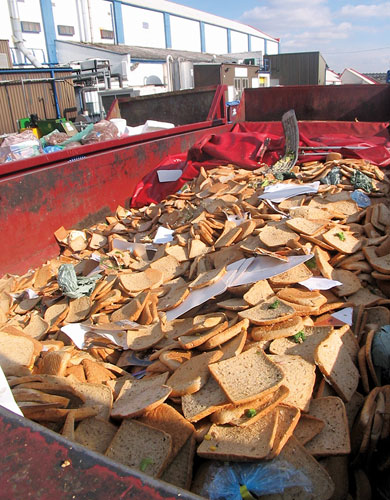
    The Guardian in the UK has an insightful feature on 'Freegans' and food waste. This article profiles Freegan campaigner Tristram Stuart and this is an eye-opening photo gallery of foods that are thrown away by stores or left to rot. The below photo shows the result of Marks & Spencer's requirement for its sandwich supplier to discard four slices from each loaf: the crusts and the first slice at either end.  This means 13,000 slices of fresh bread are discarded every day from a single factory...


    How much do you throw away in one week?
     
    The Guardian asked three people to record what they threw away in one week. I am going to try to keep a diary this week and report back.  That is scary, but it is incentive to be careful about what we buy.   Would anyone else like to keep a record and share it with us in a week or so?

    19 February 2010

    Top 10 vegan & vegetarian recipe websites we love

    Eating less meat and more plants is not only for compassionate and environmental reasons, it is also healthy and great for those trying to trim down a little.  (I have a confession that I am loving The Biggest Loser's Friday Masterclass and they encourage proteins from plant sources!).   I'm loving cooking with my Gastrolux non stick cookware too - no toxic emissions and no oil required!

    Here's my top 10 online resources for scrumptious vegetarian and vegan dishes, with favourite recipes picked out for you.

    http://bittersweetblog.wordpress.com/e-books/
    Four e-books by vegan author Hannah Kaminsky
    to download for just US$5 each with amazing recipes for ice cream and sweet treats made with no eggs or dairy.    RECIPE PICK *  Buttered popcorn ice cream!  

    http://veganfeastkitchen.blogspot.com/
    HUGE list of recipes from Bryanna Grogan, author of 8 vegan bookbooks and The Vegan Feast quarterly newsletter.  
    RECIPE PICK * Marinated tofu that's kinda like fetta
     

    http://veganyumyum.com/ Lovely photos to accompany yumyum recipes and helpful "how to" section with how to Supreme an orange, how to slice a mango, etc.
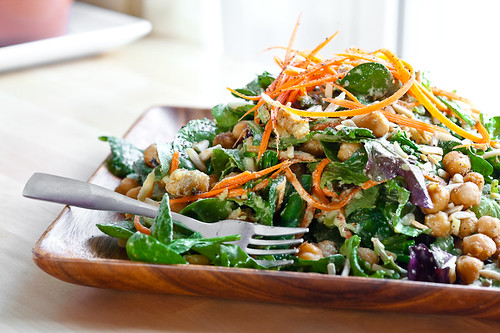
    RECIPE PICK * Avocado Wasabi Salad (pictured)  

    Martha Goes Green vegetarian cookbook  Independently published in Melbourne, Australia, printed on recycled paper with vegetable inks, with over 50 vegetarian and health conscious recipes.   Available to buy from Biome with all our vegetarian recipe books.  RECIPE PICK * Chocolate Tofu Mousse


    http://www.flickr.com/photos/47633560@N00/
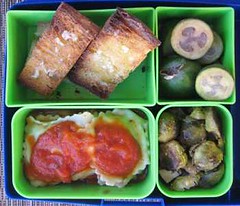
    Japan and the US have been crazy for Bento boxes long before the "waste-free" lunch box trend hit Australia.  SV Mama is a member of the Flikr Vegan Bento group that has lots of photos of Bento lunches.  Not actual recipes, but lots of ideas to fill up little boxes, like pictured here: Garlic Bread, Ravioli with Marinara Sauce, Pineapple Guavas and Sauteed Brussel Sprouts. Not sure I could get brussel sprouts past the kids!  

     
    http://www.kurma.net Cooking with Australian Vegetarian Guru, Kurma Dasa.  Vegetarian and vegan recipes, invite Kurma to cook for you and follow his culinary adventures on his blog.  RECIPE PICK * Barbequed Haloumi with Chargrilled Asparagus and Salsa Verde

    http://bokchoybohemia.com/ Everything Vegetarian and Kosher, gloriously humane comfort foods.  

    RECIPE PICK * Vegan Thom Kha Tofu soup.   For those of us who usually miss out on this amazing Thai soup.

    http://blog.fatfreevegan.com/  Won the US Veg News Veggie Awards – Readers Favourite Bog in 2007 and 2009.  Lovely photos and recipes for wholefoods without a lot of processed fat and sugar.  RECIPE PICK * Mini Crustless Tofu Quiches


    http://www.backyardbowls.com/acai_bowls.html
    Not the exact recipes, but ideas you can try - you just need to track down some Acai pulp!  If you’re everin Santa Barbara, look up Backyard Bowls.  To make Acai bowls they blend
    the frozen pulp of the Acai berry with fruits and coconut milk into a thick smoothie. Put that blend in a bowl, top it with granola, fresh fruits, Goji berries and honey.

     
    http://seitanismymotor.com/
    German influenced, so some great gluten-free breads and vegan sausages.  The longest link list of other Vegan food blogs I’ve ever seen.  Learn to make Seitan, which is made from wheat gluten and when cooked looks a lot like meat.
    RECIPE PICK * Olive and Seitan Sausages


    When you go shopping for supplies, don't forget your reusable shopping bag

    16 February 2010

    Meat Free Mondays gives different angle on vegetarian study

    Thank you so much to one of our readers, Meg, for this referral to the Meat Free Monday website and the actual WWF report How Low Can We Go?

    It is fascinating how there were several news angles that could have been taken from the WWF report, but the media picked up on the bad news/more sensationalist headline that "a vegetarian diet can harm the environment".  Actually, the report was looking at the greenhouse gas emissions involved in the UK food system, and the scope for reducing them by 70 per cent by 2050.  

    The Meat Free Monday article gives a much more balanced assessment of the WWF report.  The report said that livestock rearing alone accounts for 57 per cent of harmful emissions from UK agriculture.  It indicates that a vegetarian diet (with dairy and eggs), a 66 per cent reduction in livestock production consumption, and technologies to reduce nitrous oxide emissions from soils and methane from ruminants, had the potential to reduce direct supply chain emissions by 15-20 per cent.

    According to the Meat Free Monday article: the report pointed out that any change in meat consumption patterns would have to be managed carefully. Less animals would mean less animal feed, for example, freeing up arable land, but how we compensate for a diet lower in meat, eggs and dairy could also have an adverse effect in terms of emissions. A switch from beef and milk to tofu and quorn could mean we need more arable land, not less. Emissions could be reduced nine per cent with a switch from red to white meat, the report also said, but would see an increase in the import of soy meal for poultry feed.

    The report warned that "careful assessment" would be needed to avoid "unintended consequences", however. If the livestock industry contracted and collapsed entirely then the UK would be dependent on low-cost exports from other countries - it might make us healthier, but the environmental problems associated with meat production would simply be shifted elsewhere.

    15 February 2010

    Vegetarian no longer eco. Who moved my cheese...?

    Photo of Chocolate Tofu Mousse from Martha Goes Green Vegetarian Cookbook

    In the world of eco-friendly, one thing is for certain... change!  Just when you think you have the goal posts lined up for what is the most eco-friendly choice, someone moves them.  This is not a criticism, we love the intellectual and ethical deliberations, but I'm not good at change.  When it comes to change, I turn like an ocean-liner...slowly.

    It happened with palm oil and soy.  At first, it was virtuous to be replacing petrochemical oil with with a plant oil, for example producing a palm wax candle instead of a paraffin candle -- but then the environmental movement made us aware of the rainforest destruction being caused by palm and soy plantations.

    Bamboo is the perfect eco-friendly material, a fast growing and self-renewing plant requiring no pesticides or fertilisers that can be used for food, clothing, paper and building -- but now we've learned that we need to look for "panda-friendly" bamboo.  This is bamboo that does not deprive pandas of a food source, like Moso bamboo, which has no leaf growth on the first five metres of the stem.

    Recently, the WWF has released a report that shows a vegetarian diet is not necessarily better for the planet than meat.  The UK study found that many meat substitutes were produced from soy, chickpeas and lentils that were grown overseas and imported into Britain.  It found that switching from beef and lamb reared in Britain to meat substitutes would result in more foreign land being cultivated and raise the risk of forests being destroyed to create farmland. Meat substitutes also tended to be highly processed and involved energy-intensive production methods (quoted from the article at Times Online "Tofu can harm the environment..")

    When I read this story, the first thought that came to mind was "who moved my cheese" again? One of our Biome team introduced me to this great change management concept.  Your "cheese" may be your career, a relationship, your neighbourhood peace and quiet, your environmental values.  For those of us who struggle with change, it may be worth a look.  Who Moved My Cheese? is about helping you to enjoy less stress and more success by learning to deal with the inevitable change.

    The WWF study is not course-changing for us vegetarians, but it is a nudge to the bow.  It encourages everyone to think about where our food comes from and to eat more foods that are less packaged and less processed - the same principles for whatever diet you follow.

    More reading and vegetarian recipe books at Biome.

    Coprights @ 2016, Blogger Templates Designed By Templateism | Templatelib